As the global agricultural system makes an urgent transition to resilience and sustainability, key technologies are emerging as game changing enablers. One innovation that is making a profound difference in the development of climate-resistant farming systems is digital twin technology.
This article gives a broad overview of how digital replicas of physical systems are streamlining agricultural research and planning, enabling greater climate resilience, and facilitating a fundamental shift from reactive to proactive agriculture. The global farming industry is undergoing faster and more profound technological advances in the space of a single decade than it did in the previous 11,000 years. Digital twins are playing a major role in the new agricultural revolution.
Introduction: Virtual Tools for Real-World Farming Challenges
A digital twin is an exact replica of a physical entity, or a system or process. The digital replica is contextualized in a digital version of its physical counterpart’s environment. Users can simulate situations and scenarios increasing the scope, and decreasing the costs and timescales of important research and development.
Agronomists and agricultural scientists are increasingly employing digital twins in the drive to create smarter and more resilient agricultural systems. They are emerging as one of the key technologies in the development of solutions to manage climate stress and create a lasting solution to global food insecurity. ICL Group is one of the major international companies making significant investments in the development of sustainable agriculture technology and is innovating in the use of digital twins.
What Are Digital Twins in Agriculture?
Digital twins in agriculture replicate physical systems, drawing on either real-time or historical data – or a combination of the two – to model the performance of the replicated systems (such as fields, greenhouses, irrigation and nutrient flow systems). Digital twins allow detailed and highly accurate experimentation and modeling on a level and at a speed beyond the capacity of traditional static models, farm analytics or monitoring tools.
How Digital Twins Work on the Ground
Advances in the integration of key data inputs utilizing the internet of things (IoT) and AI, including sensors, satellite imagery, weather APIs, and crop models enable the collection of raw data. The harvested data is processed and analysed using cloud platforms, simulation engines and machine learning. Data can be utilized in real time, or stored for future access. Researchers and agronomists can even combine current and historical data to power insightful and incisive predictive modeling.
The rapid technological advances of Industry 4.0 are turning big data into a vital asset that drives digital twins. End users – agronomists and an increasing number of tech savvy farmers – interact with the systems through dashboards or mobile tools. The ability of app users to work remotely, via a supported system, increases the productivity and efficiency of agronomical operations and puts them on a par with Industry 4.0 smart factories.
Benefits for Climate Resilience and Sustainable Farming
Although many people with a background in technology are familiar with the basic principles of digital twins, there is less understanding of how the virtual tools can benefit climate resilience and sustainable farming, or even regenerative agriculture methods that strengthen vulnerable ecosystems.
Digital twins can be used to model variable weather conditions and create solutions for adaptive precision crop irrigation and fertilization. A clear understanding of soil makeup and weather conditions allows for tailored crop nutritional solutions and improved nutrient use efficiency (NUE).
Data-based decision making enables growers to reduce wastage and strain on natural resources, minimize environmental damage from fertilizer runoff, and lower their carbon footprints through emission reduction.
One of the challenges facing the global farming system is the need to implement regenerative agriculture on a major scale, both to preserve existing farmland and to reclaim marginal lands. Digital twins help scientists and agronomists to model outcomes for soil health, carbon retention and sequestration, and biodiversity initiatives.
There is also a pressing need to deliver global food security for a rapidly expanding human population. The global farming system will have to feed as many as 10 billion people by the mid 2080s. Digital twins are bridging the technological gap to provide improved crop yield forecasting. Agronomists can plan with a substantially higher degree of confidence, and can also model the performance of novel crops that they wish to introduce to a specific location.
Data-Driven Planning: Moving from Reactive to Predictive Agriculture
Farmers have relied on historical data since humans developed enough sophistication to keep detailed records. From the late 18th century farmers almanacs provided basic data-based references that offered at least some input into planting and harvesting decisions. Modern digital twins access a mass of historical big data to extrapolate relevant information, and combine it with real time data to allow precise predictive modeling.
Historical weather reports, soil data and crop data provide agronomists with context and patterns. The knowledge of what actually happened in the past, and the combination of circumstances and conditions that caused a particular event e.g. weather conditions that led to an outbreak of crop disease or pest infestation, or, more positively, a bumper harvest, alerts agronomists and farmers to potential future outcomes.
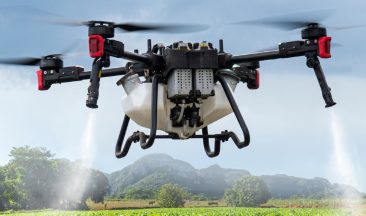
A flow of real time data, which can be sourced from soil sensors, drone and satellite imagery, and current weather reports, delivers up to date inputs. Digital twins can combine current and historical data to alert farmers to both risks and opportunities. Static farm models become living systems that use combined data to interpret fluid and evolving situations and deliver accurate predictive modeling.
Historical data might show that a mild winter followed by unseasonably wet and humid conditions, and combined with other diverse factors, increases the likelihood of an outbreak of crop disease. If a digital twin detects similar conditions at field level, it can alert users with predictive modeling. Farmers who are forewarned can take proactive steps to protect their crops.
A combination of historical and real time data enables digital twin operators to run simulations and test scenarios before applying them. This removes the element of guesswork (or reliance on obsolete or flawed practices) that can be so risky for farmers whose livelihoods depend on accurately anticipating all the variables that are an inherent part of the natural ecosystem. Improved risk management adds resilience to the global agricultural system and improves food security.
Digital twins are entirely scalable and can support growers across the entire agricultural spectrum, from smallholders up to large scale plantations and food producers. Growers benefit from zone specific recommendations that allow the development of tailored solutions that create sustainability and resilience, and can improve profitability and efficiency at a local level.
Agmatix: Turning Data into Agronomic Action
Agmatix, a pioneering agro informatics company that forms part of ICL’s AgTech digital solutions, applies digital twin technology to simulate field trials and complex agronomic scenarios. The company’s innovative Axiom platform uses a combination of data streams to accurately model crop responses to a variety of stresses and environmental conditions. It also models nutrient strategies and soil conditions to devise optimal solutions for crop planning. Axiom empowers researchers and agronomists to make faster and better informed – and data-derived – decisions, while reducing costs and timescales.
Conclusion: Digital Twins as a Cornerstone of Resilient Agriculture
Digital twins are playing a transformative role in the new agricultural revolution. Researchers, agronomists and corporate strategists whose goal is to build a smarter, more resilient and more sustainable global agricultural system, and ensure food security for future generations, are rapidly beginning to see digital twins as one of their most valuable AgTech solutions.
ICL, and its subsidiaries and strategic partners are continuing to integrate digital twins into their operations as part of their commitment to digital innovation and sustainable agriculture. The adoption of digital tools is more than an emerging agriculture trend, or the latest tech upgrade, it is a strategic shift that is already defining the future of farming.