If 2025 was the year of exploration—where the industry marveled at the potential of AI in agriculture and set ambitious carbon goals—2026 is shaping up to be the year of execution and resilience.
Last year, our focus was on the promise of digital farming. We discussed how sustainable farming technology “could” transform the industry. However, as we enter 2026, the conversation has shifted dramatically. Farmers and agronomists are no longer asking “What can this technology do?”; they are asking “How does this pay off today?” and “Will this crop survive the summer?”
We sat down with Dvir Taler, ICL’s Chief Agronomist in Israel, to map out the critical breakpoints facing the industry. The consensus is clear: the trends for 2026 are driven by two urgent necessities: Standardization (making data work) and Survivability (helping crops withstand extreme climate).
Here are the four definitive trends shaping global agriculture in 2026.
1. The AgData Revolution: From “Big Data” to “Decision Support”
For years, the sector has been drowning in big data in agriculture but starving for insights. In 2025, we saw a flood of sensors and apps. In 2026, the focus is on standardization and connectivity.
The industry is transitioning to true agronomic data analytics. It’s no longer about collecting isolated points of information; it’s about unified systems that can compare entire growing seasons, identify cross-regional patterns, and generate automatic operational recommendations.
A Major Shift for 2026: Israel has officially joined the European effort to lead AgData standardization. This is a game-changer. It means that fragmented data siloes are breaking down. Decision Support Systems (DSS) can now “speak” the same language, allowing algorithms to analyze years of historical data to predict pest outbreaks or nutrient deficiencies with unprecedented accuracy.
The ICL Perspective: We are leveraging these standardized data flows to refine our nutrient use efficiency (NUE) models, ensuring that every grain of fertilizer is accounted for.
2. Automation & Robotics: Breaking the ROI Barrier
In previous years, agricultural robotics were often viewed as impressive prototypes. In 2026, the narrative has shifted to Return on Investment (ROI). The driving force is the intensifying global labor crisis, making precision agriculture not just a luxury, but a survival mechanism.
What to watch this year:
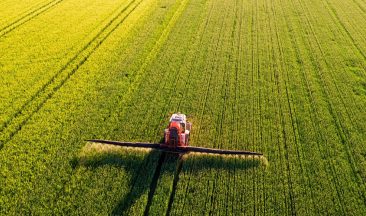
- Autonomous Fleets: Tractors and sprayers that operate 24/7 without human intervention are becoming standard.
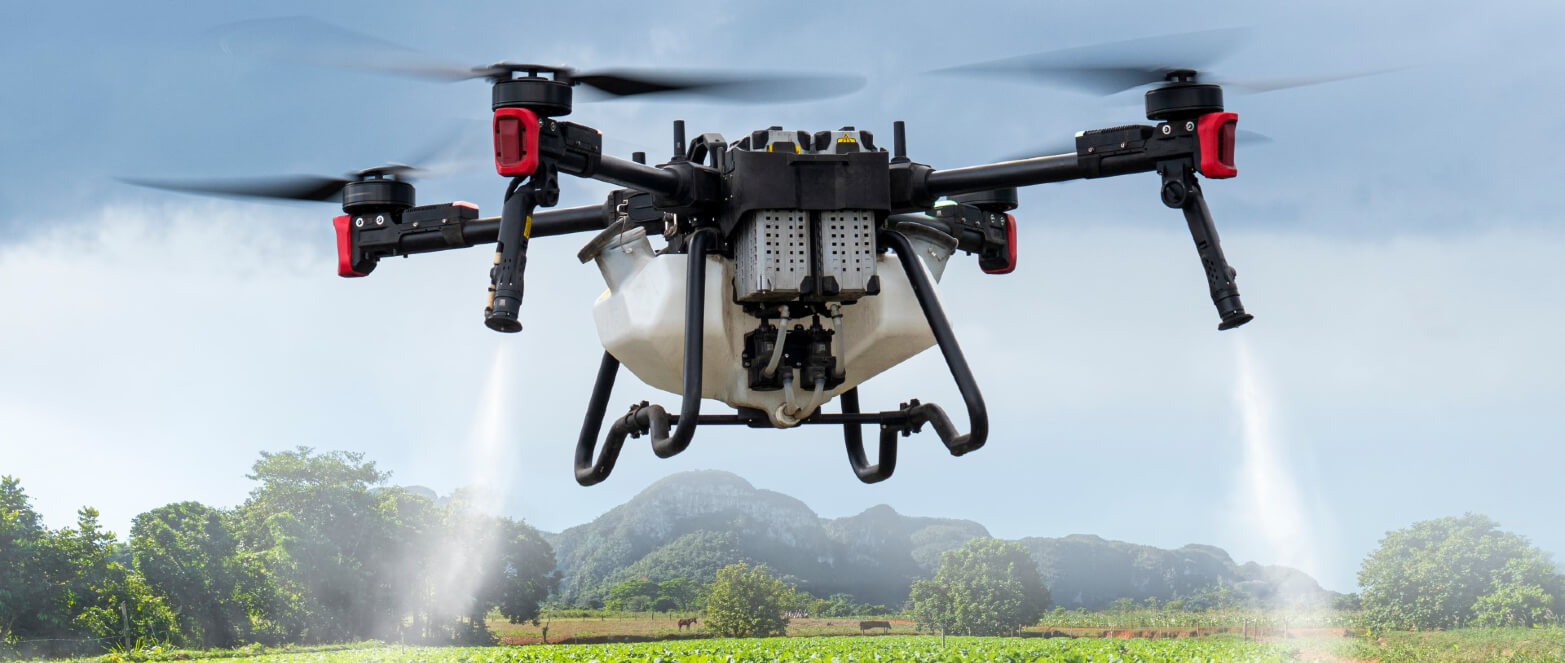
- Remote Crop Monitoring: Advanced sensors and drones are now providing real-time health alerts, reducing the need for manual field scouting.
- Precision Harvesting: Robotic arms can now handle delicate fruits at a speed that rivals human pickers.
Manufacturers are finally offering leasing models and lower entry costs, making these technologies accessible to mid-sized growers who need to solve labor bottlenecks now.
3. Climate-Smart Agriculture: The “Defense” Strategy
While sustainability remains a core value, the buzzword for 2026 is “Resilience.” Climate change is no longer a future prediction; it is a daily operational hazard.
Climate-Smart Agriculture (CSA) has evolved from a mitigation strategy to a defense strategy. Farmers are adopting active protection measures:
- Physical Protection: We are seeing a massive increase in the deployment of smart netting and shading systems to physically shield crops from abiotic stress.
- Physiological Hardening: This involves the use of advanced biostimulants and controlled release fertilizer technologies designed to “harden” the plant, improving its natural tolerance to salinity and heat while minimizing environmental impact.
4. The Biotech Leap: CRISPR & Non-GMO Breeding
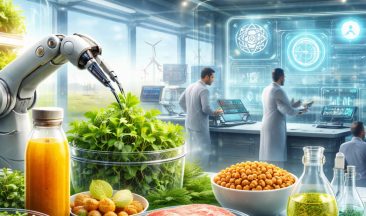
Perhaps the most significant divergence from 2025 is the speed of genetic innovation. Traditional breeding methods simply cannot keep pace with the rapidly changing climate. In 2026, the industry is embracing Biotechnology acceleration.
The spotlight is on CRISPR and Gene Editing. Unlike traditional GMOs (which introduce foreign DNA and face heavy regulation), CRISPR allows for precise edits within the plant’s existing genome.
Why this matters now:
- Speed to Market: We can now develop a drought-resistant variety in a fraction of the time.
- The “Non-GMO” Advantage: These gene-edited crops are increasingly classified separately from GMOs, allowing for faster regulatory approval.
- Targeted Solutions: Scientists are creating bespoke varieties tailored to specific 2026 challenges—such as wheat that thrives in higher temperatures.
Summary: The Year of Pragmatism
If we look back at our 2025 predictions, we saw the potential of technology. In 2026, we are seeing its necessity. The combination of big data in agriculture, pragmatic robotics, climate defense, and rapid gene editing forms the new toolkit for modern farming.
ICL continues to stand at the intersection of these trends, providing the advanced crop nutrition and digital tools needed to turn these challenges into sustainable growth.