Feeding a Growing Planet
Hunger remains one of humanity’s greatest challenges. Nearly 800 million people around the world still experience food insecurity, facing not only the pain of hunger but also its cascading impacts on health, productivity, and social stability. In an interconnected global economy, food insecurity anywhere has ripple effects everywhere.
Yet, hunger today is not simply a question of insufficient production. It is also a crisis of inefficiency, inequality, and waste. According to the World Resources Institute (WRI), nearly one-third of all food produced globally is lost or wasted before it reaches a plate. This represents a missed opportunity to feed billions, a misuse of natural resources, and a major contributor to global greenhouse gas emissions.
To achieve UN Sustainable Development Goal 2: Zero Hunger, society must take a comprehensive approach; one that tackles both food waste and food security, while advancing sustainable agriculture and technological innovation.
Why Addressing Food Waste Is Crucial
Food loss and waste occur at every stage of the value chain: from farms and storage facilities to supermarkets and households. In low-income regions, food is often lost early, due to poor infrastructure, limited refrigeration, or lack of access to efficient markets. In wealthier economies, the problem shifts downstream, as edible food is discarded by retailers or consumers.
The food waste problem goes beyond moral and economic considerations. Food that never reaches the table still consumes enormous quantities of land, water, and energy. It also generates around 8–10% of global greenhouse gas emissions, a figure that rivals major industrial sectors. Tackling this issue is therefore critical to both food security and climate action.
Reducing food loss and waste is not only why food waste is important, but also how we can make the most immediate, cost-effective progress toward ending hunger.
Sustainable Solutions Across the Food System
Ending hunger requires a coordinated effort across governments, industries, and communities. No single company or technology can do it alone, but collaborative, systemic action can.
1. Smarter, More Resilient Agriculture
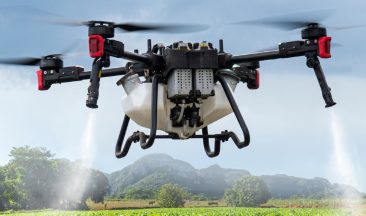
Agricultural innovation remains a cornerstone of food security. Instead of expanding farmland or relying on intensive chemical use, the focus is shifting toward precision agriculture and regenerative practices that increase productivity while protecting the planet.
ICL develops controlled-release fertilizers, biostimulants, and digital agriculture tools that help farmers produce more with fewer resources. Controlled-release fertilizers, such as eqo.x, use a first of its kind biodegradable coatings to regulate nutrient delivery,reducing nutrient loss by up to 50% and improving nitrogen efficiency by up to 80%. This not only boosts yields but also prevents water contamination and lowers the carbon footprint of farming.
These advances are part of a broader movement toward sustainable intensification, getting higher yields from existing land, improving soil health, and promoting circular nutrient cycles that reduce waste.
2. Harnessing Data and Digital Agriculture
Digital agriculture, powered by Big Data, AI, and IoT, represents a transformative step forward. Platforms such as Agmatix and Growers software are enabling farmers to make data-driven decisions on planting, irrigation, and crop nutrition.
These tools help manage climate-related risks, optimize input use, and forecast yield outcomes. More importantly, digital agriculture can help identify inefficiencies that lead to food waste before harvest, improving storage, logistics, and crop matching to consumer demand.
Data connectivity also accelerates research and innovation by standardizing field trial data, connecting agronomists globally, and ensuring faster validation of new solutions. This contributes to stronger agricultural resilience and fewer post-harvest losses.
3. Extending Food Shelf Life and Reducing Spoilage
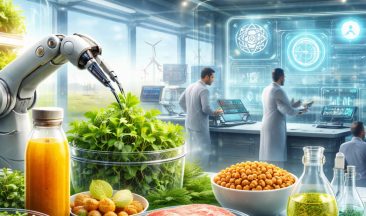
Beyond the farm, new food technologies are emerging to extend freshness and minimize waste throughout the supply chain. ICL Food Solutions is one example of how science-based innovations—such as natural preservation systems, functional ingredients, and texture-enhancing phosphates—can help maintain food quality and safety for longer periods.
Innovations in food preservation are not about producing more food, but about making what we already produce last longer and reach more people. Across industries, similar advances are appearing:
- Edible coatings and active packaging that slow ripening and prevent spoilage.
- Cold-chain logistics that maintain temperature integrity in developing regions.
- AI-powered inventory management to predict expiration dates and reduce retail waste.
These combined efforts form the backbone of practical, scalable solutions for food waste.
4. Building a Circular Food Economy
A truly sustainable food system requires closing loops and rethinking value. That means reusing agricultural by-products, recycling nutrients, and converting organic waste into fertilizers, feed, or bioenergy.
Circular models are emerging across the world, from composting and anaerobic digestion facilities that transform food scraps into renewable energy, to upcycling companies that turn fruit pulp or grain waste into high-protein ingredients.
ICL is investing in nutrient recycling and low-carbon production to align with circular principles. But the ultimate goal is a global food chain where nothing valuable goes to waste, where production, consumption, and recovery are connected in one continuous cycle.
5. Shared Responsibility: Everyone Has a Role to Play
Technology alone cannot solve hunger. People—employees, farmers, retailers, and consumers—are at the center of change. Addressing food loss and waste is a shared responsibility that requires collaboration at every level of the food system.
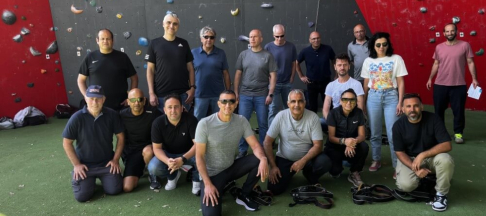
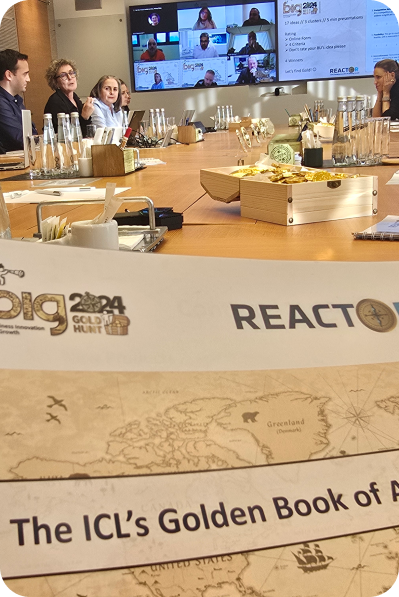
ICL’s Business Innovation for Growth (BIG) accelerator illustrates how internal creativity can be mobilized to generate tangible sustainability solutions. While few initiatives combine such scale and cross-disciplinary collaboration, the principle behind it, empowering individuals to act, applies universally. From grassroots food recovery efforts to educational programs promoting mindful consumption, collective action is driving meaningful progress.
Public awareness is equally essential. Encouraging clearer food labeling, better meal planning, and conscious purchasing habits can significantly reduce household food waste, particularly in urban areas where overbuying and confusion over expiration dates are common. Lasting change begins when everyone—across industries and communities—takes responsibility for their role in the global food system.
Collaboration Beyond Borders
Solving global hunger demands unprecedented collaboration. Governments can establish supportive policies, such as food donation incentives, waste-reduction targets, and subsidies for cold storage, while private-sector innovators deliver scalable tools and technologies.
International initiatives like the Food Loss and Waste Protocol, developed by the World Resources Institute, offer a common framework to measure progress. Shared data and open innovation networks will accelerate progress far faster than isolated efforts.
Meanwhile, organizations, startups, and research institutions worldwide are investing in sustainable farming, supply-chain transparency, and next-generation food preservation. ICL’s Food Technology Innovation efforts form one part of this global ecosystem—working in synergy with others to address food insecurity holistically.
A Path Forward
To solve world hunger, the global community must address both production and preservation, growth and equity, efficiency and access. We have enough knowledge, technology, and resources to feed everyone, the challenge is to align them effectively.
Reducing food waste and food insecurity simultaneously is among the most immediate and impactful steps we can take. It saves money, conserves resources, cuts emissions, and, most importantly, ensures that food nourishes people instead of being discarded.
Ending hunger isn’t just about growing more, it’s about growing smarter, sharing better, and wasting less.