Farming is a business that depends on several variables to remain financially viable. These begin with basic overheads that include clean water for irrigation and animal husbandry, fertilizers for crop nutrition, pesticides and fungicides, farm vehicles and equipment, and fuel to run them. Farmers may also face labor costs and are potentially vulnerable to fluctuations in commodity prices that can drive up fuel and fertilizer costs – or drive down the value of harvested food staples.
Another significant limiting factor of farming is the weather. Modern farmers can benefit from advanced weather prediction technologies, but ultimately remain as vulnerable to freak weather events as their earliest agricultural predecessors did thousands of years ago. Rapid climate change is causing increasing instability and an increase in the frequency and severity of extreme weather events and associated problems such as droughts, flooding, tropical storms, and fires in nature.
Utilizing AgTech to Improve the Viability of Farming
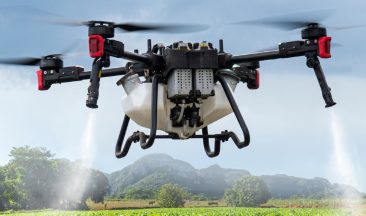
The rapidly developing technologies of Industry 4.0 – AI, the Internet of Things, big data and cloud, blockchain, robotics, sensors, and drones, etc. – are enabling advances in AgTech. Smart technologies from industry, combined with advances in gene editing and CRISPR, microbiome research, and new biopesticides and biostimulants, are significantly reducing traditional limitations on farming and are driving a new 21st century agricultural revolution.
ICL is channeling its resources and technologies into the development of novel solutions for farming and is continually researching new ways to improve the viability of agriculture on a sustainable level.
Reducing Input Pricing with Advanced Fertilizer Solutions
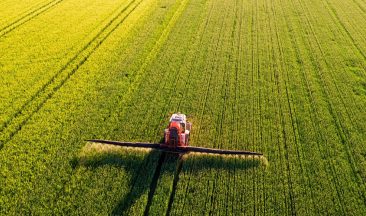
Crop nutritional solutions represent a major production cost for growers.Traditional nitrogen fertilizers may be nutrient dense, but they are often inefficient. Ammonia volatilization and inadequate urea and UAN (urea and ammonium nitrate) incorporation can result in the loss of up to 40 percent of applied nitrogen. Not only is the nitrogen wasted, but it can also cause negative environmental impacts as it leaches into groundwater or water courses.
ICL is addressing the problem of nitrogen wastage through the development of advanced controlled release fertilizers (CRFs). These utilize highly sophisticated soluble coatings to release nutrients at a predictable rate throughout the lifecycle of a crop. Not only do they significantly reduce nutrient loss, but they generally only require a single application. Farmers can achieve improved operational efficiency as well as cost-efficiency.
One of the most innovative ICL crop nutritional solutions is the eqo.x fertilizer designed for open field agriculture. Its biodegradable coating reduces nutrient loss and increases nutrient use efficiency (NUE) by up to 80%.
This is a game-changing improvement on traditional fertilizer performance. Additionally, eqo.x capabilities are in alignment with the EU Soil Strategy for 2030, which aims to reduce the loss of nutrients by at least 50% within the next five years.
This alignment underscores ICL’s commitment to delivering innovative solutions that meet both sustainability goals and evolving regulatory requirements in European agriculture.
Improving Soil Health and Soil Regeneration
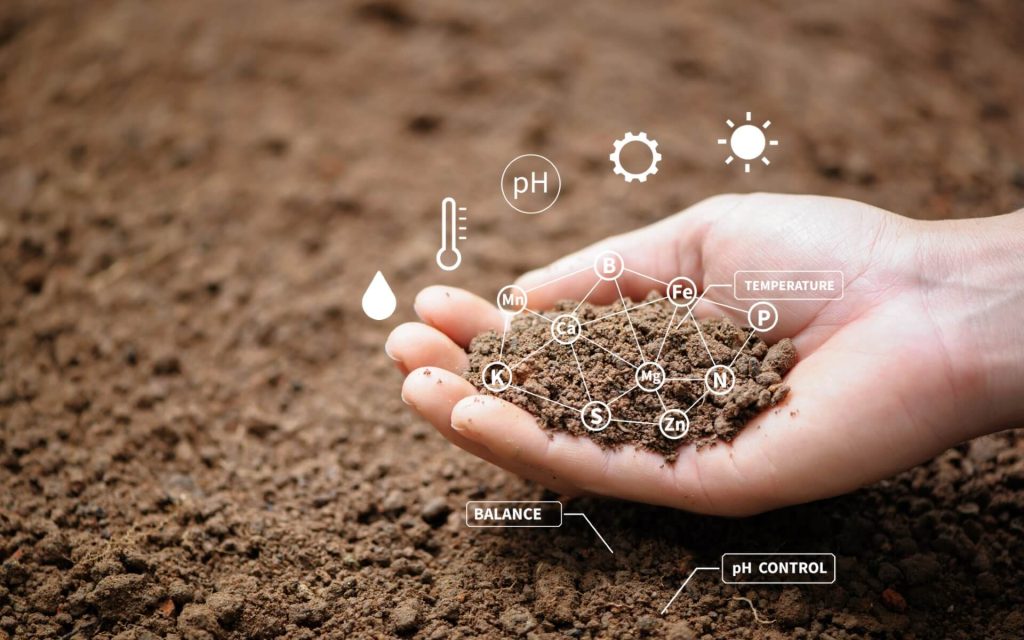
One of the major challenges facing the global agricultural system is the requirement to shift to sustainable farming models. It is no longer viable to allocate more land to agricultural use and to depend on intensive applications of chemical fertilizers and pesticides to produce harvests. What this means at farm level is that growers need to maximize the productivity of existing agricultural plots, while minimizing environmental damage.
The ICL range of BIOZ® biostimulants and enhanced nutrient fertilizers is providing farmers with a choice of effective solutions to enhance the natural performance of crops and help them to achieve their full growth and nutritional potential, as well as improving soil health. BIOZ® biostimulants can strengthen plant root systems and improve their metabolism and nutrient uptake, they can also improve the vigor and resilience of seedlings, and promote resistance to abiotic stress and faster recovery from stress periods.
ICL recently strengthened its biostimulant capabilities through the acquisition of Lavie Bio’s core team, proprietary microbial bank, and AI-powered BDD technology platform. This integration allows ICL to accelerate the discovery of next-generation microbial biostimulants designed to improve crop yields and resilience under extreme climate conditions.
Applying Digital Agriculture for Growth
One of the biggest traditional limiting factors for farmers was access to data and the ability to make informed decisions about every phase of crop production. Farmers traditionally relied on personal experience and almanacs, and then on scientifically formulated weather predictions. Even with the full use of available resources, and coordination with agronomists and official bodies, there was still an element of guesswork involved.
Digital agriculture is utilizing big data, cloud, AI, and algorithms to create apps and platforms that allow farmers easy access to a mass of big data. They can practice an extraordinarily high level of risk management and make informed data-based decisions about seed types, irrigation, fertigation or fertilization solutions, soil enhancement, and even materials purchasing and food marketing.
Agmatix is an ICL startup whose software and platforms are empowering agronomists and farmers around the world. Agmatix software is also transforming agricultural research and field trials through the standardization of data and advanced data analytics.
In addition, Agmatix is advancing regenerative agriculture through AI-driven insights that help reduce agriculture’s carbon footprint and support long-term soil health—contributing to more sustainable food systems globally.
Investing in the Future Viability of Farming
ICL is highly focused on transforming the agricultural sector with new technologies and solutions. The goal is to push beyond the traditional limitations that are restricting the expansion of sustainable agriculture and contributing to the current situation where 800 million people face daily food insecurity. ICL investment in CRF fertilizers, biostimulants, digital agriculture, and a host of other solutions is advancing sustainability and food security, while strengthening rural communities and protecting the environment.
Through its fertilizer innovations, ICL helps enable the production of approximately 70 million additional tons of food annually—equivalent to 420 billion meals and contributing to the daily nourishment of 400 million people worldwide.