One of the often overlooked challenges impacting global food security is the loss of over 13% of food supplies between harvest and retail—much of it due to avoidable food waste. In the past, this appalling wastage was largely viewed as an inevitable outcome of supply chain inefficiencies.
There is now a global push towards sustainable agriculture and a realization that food waste contributes directly to food insecurity. This article explains why it is vital that our society addresses issues relating to food waste and food security, and how ICL innovations are transforming the food supply chain.
How the Food Waste Problem Impacts Food Security
We currently face a combination of serious threats to world food supplies. Global warming and extreme weather events – particularly droughts and flooding – are negatively impacting food production.
Unstable commodity prices and regional conflicts are also placing stress on societies that depend on a reliable supply of affordable food staples. Perhaps the biggest challenge is population growth. The world population is expected to top 10 billion during the 21st century and will increasingly concentrate in urban environments, reducing agricultural capacity.
The United Nations estimates that around 733 million people faced food insecurity in 2023, equivalent to one in eleven people globally. Apart from the direct suffering this causes, it robs people – and especially children – of their natural potential. Countries that experience food insecurity struggle to develop economically and experience social instability. In a globalized world, the wider consequences impact every society.
The millions of tons of produce that currently go to waste between harvest and final consumer purchase could make a serious dent in global hunger. Optimization of the supply chain that eliminates up to 17% food waste will also place considerably less strain on infrastructures and reduce the environmental footprint across the entire food production and retail spectrum. The other significant advantage is that it can potentially drive down food prices for consumers.
Innovative ICL Solutions for the Food Waste Problem
ICL is committed to embedding sustainability across the entire agricultural value chain and advancing the second United Nations Sustainable Development Goal (SDG 2): Zero Hunger. Recognizing that the food waste problem is a complex issue requiring solutions at multiple stages of the supply chain, ICL has adopted a systemic approach—targeting post-harvest preservation, shelf-life extension, and predictive crop planning.
The company’s strategies include:
- Developing safe, mineral-based treatments to preserve newly harvested produce and reduce spoilage.
- Creating healthy food-grade ingredients that extend the shelf life of processed foods while maintaining or improving quality.
- Using predictive AI to help farmers and retailers align production with future market demand, minimizing surplus and waste.
One flagship ICL solution is FruitMag™, a magnesium-based product that is applied to newly harvested citrus fruits as a healthy alternative to traditional fungicides. Applied after harvest, FruitMag™ helps extend freshness during storage and transport— significantly reducing spoilage.
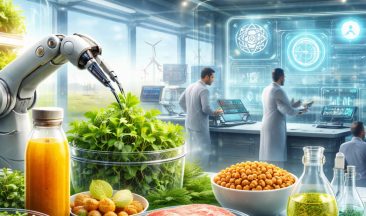
ICL is also a major producer of food-grade phosphates and is continually innovating to develop new food ingredients that extend the life of food products, as well as improving the flavor, texture, and aroma of foods. This research is also enabling the development of marketable alternative proteins, including plant-based proteins and meat alternatives that can be commercially manufactured. Advanced research into edible phosphates as preservatives and emulsifiers is creating valuable solutions for food waste reduction.
Meanwhile, digital platforms like Agmatix and GROWERS are driving next-generation agricultural planning.
Agmatix leverages predictive analytics and AI-powered modeling to help farmers and agronomists make data-driven decisions—optimizing crop production, improving yields, and reducing food waste by aligning supply more closely with market demand.
GROWERS, also part of ICL’s digital portfolio, streamlines the way farmers source agricultural inputs by connecting them directly with trusted retailers. By simplifying procurement and improving timing it helps reduce input waste and supports more efficient, sustainable farming decisions.
Together, these innovations reflect ICL’s holistic approach to reducing food waste and improving food security.—from smarter crop planning and procurement to safer post-harvest treatments and longer-lasting food products. By addressing inefficiencies across the food system, ICL is helping to create a more resilient, resource-efficient, and food-secure future.
Tackling Food Waste and Food Insecurity in the Future
There is no doubt that reducing food waste is one of the most immediate and impactful ways to strengthen food security, but there’s no single solution. That’s why ICL is pursuing a multi-faceted approach that targets various stages of the food supply chain. From production and preservation to processing, procurement, and planning, the goal is to deliver scalable, science-driven solutions that are easy to implement, economically viable, and environmentally responsible.
ICL is closely following new food tech trends and continues to invest in next-generation solutions, developing innovative ingredients and treatments that reduce spoilage, extend shelf life, and modernize the supply chain from field to fork.
Looking ahead, ICL is also channeling resources into alternative proteins, smart farming products, and technologies to support more resilient agricultural systems. The coming decade will demand a fundamental rethinking of how and where food is produced. ICL is not only preparing for that future—it’s helping shape it, in close collaboration with partners who share the same commitment to sustainability and food security.