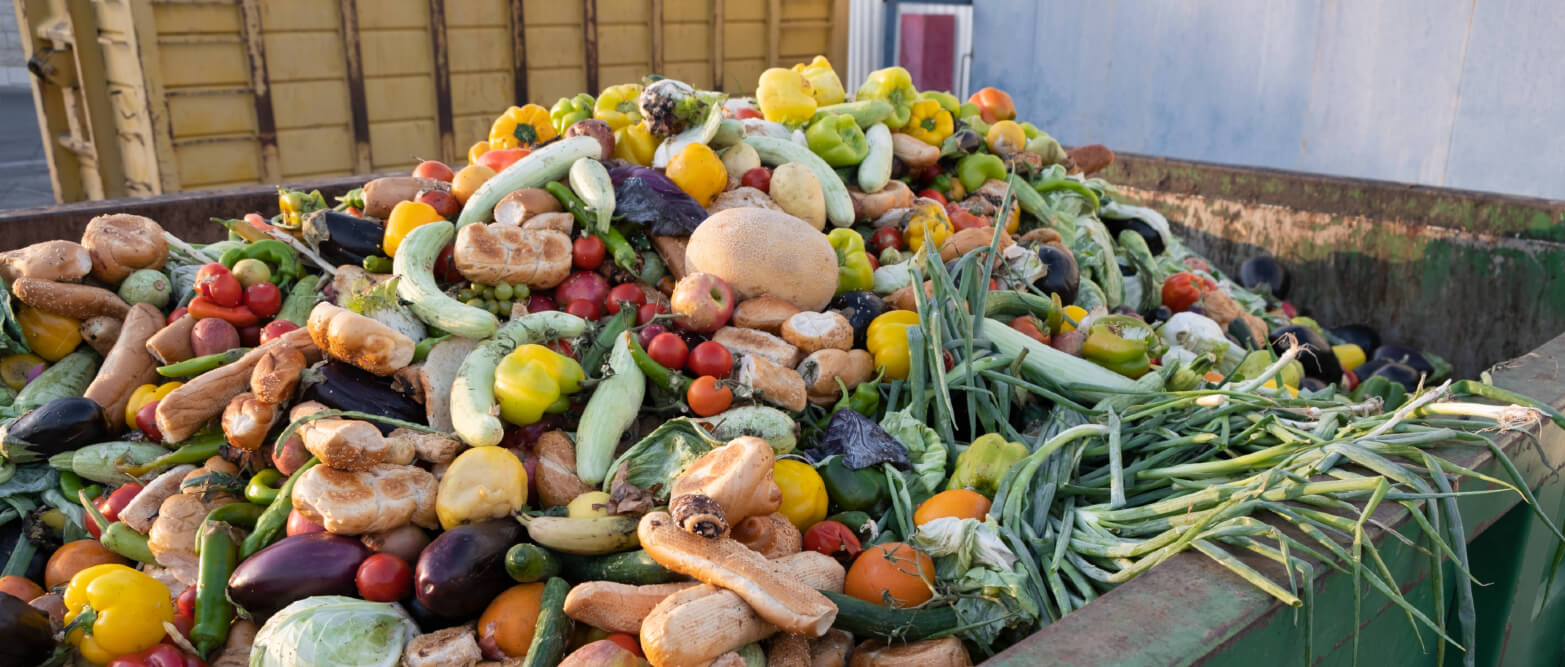
One of the hidden problems of the global food production system is food waste. An estimated 1.3 billion tons of food produce is discarded or spoiled annually, amounting to a value of US$1 trillion. That’s enough food to feed 3 billion people – or more than a third of the world’s population. At a time when 800 million people are experiencing food insecurity, these figures are particularly shocking.
Human suffering aside, the environmental consequences of food waste are equally pernicious. Traditional agricultural methods create a direct environmental impact, and avoidable food wastage exacerbates these issues. This article will give a broad overview of the environmental impact of mass food waste and explore how ICL is developing novel products and solutions to reduce food wastage.
Why is Food Waste a Problem?
Food production at field level – whether it’s crops or animal products – generally depends on three core resources. These are water, agricultural land, and crop nutrients in the form of fertilizers. The growing process usually also requires applications of pesticides or biocides. Further down the food supply chain, there is often a requirement for fungicides and preservatives to improve the longevity of food products.
Utilizing these resources creates direct environmental impacts, particularly when growers are still using obsolete and inefficient farming methods. Any finished food product is the sum of the resources used to grow it. When the food is wasted, the resources – and human labor – have been wasted.
ICL’s phosphate-based products enhance the quality and longevity of approximately 43 million tons of food, the equivalent of 230 billion meals annually—meeting the caloric needs of around 210 million people each year
Whenever food is produced, water supplies are depleted, soil quality is diminished, and the ecosystem is impacted by (costly) fertilizers and pest control, and crop disease solutions. The food supply and distribution network also creates a carbon footprint and adds to the cost of food products. When food is wasted at the end of the supply chain, it has already accrued a carbon footprint and placed strain on transport infrastructures.
Wasted food accounts for:
- 21% of freshwater used in agriculture
- 19% of fertilizers
- 18% of agricultural land
Additional Environmental Consequences of Food Waste
One of the key environmental issues relating to food waste is the requirement to dispose of unused food products safely. Disposal is (in theory) relatively simple for fruit and vegetable products, but becomes more complicated for meat and fish products, or downstream food products that are in plastic packaging.
The traditional method of disposing of wasted food is to place it in landfills where it decomposes amidst a host of other waste materials and detritus. The decomposition process releases methane, a potent greenhouse gas that is 25 times more detrimental to the environment than carbon dioxide. The release of significant amounts of greenhouse gasses is one of the most destructive environmental consequences of food waste.
How ICL is Reducing Food Waste and Its Environmental Impact
Given the scale of the problem, there is an urgent need for practical, science-based solutions to reduce waste across the entire food system. ICL is responding with innovations that target preservation, processing, and digital optimization. One innovative solution is FruitMag™, a material used in the postharvest treatment of citrus fruits.
FruitMag™ is based on food additives, that act as an alternative to potentially harmful fungicides to prevent rot in harvested fruit. A FruitMag™ solution can be easily applied to the surface of the fruit by spraying or immersion, with zero health risks to workers. FruitMag™ is manufactured through sustainable processes and meets consumer demand for safer methods and treatments that leave no toxic residues.
In recognition of its environmental benefits, FruitMag™ received the 2025 SEAL Sustainable Product Award for its innovative use of Dead Sea magnesium to reduce citrus losses without fungicides
ICL is also a major producer of phosphates and channels research into applications for food-grade phosphates in the shelf life extension of foods. The key to shelf life optimization and product freshness for Meat, Poultry and Seafood (MPS) and Dairy products is the stabilization of proteins.
To further advance its work in this space, ICL opened a new specialty plant in China in 2024 dedicated to co-developing innovative, culturally relevant food solutions—many of which focus on shelf-life extension and reducing food waste through advanced ingredients
Advanced phosphate blends can inhibit bacterial growth in food products with high pH-values and can also delay the oxidation of fats (through iron sequestration) and prevent unpleasant odours and tastes. ICL’s phosphate-based food solutions like TARI®, BRIFISOL®, and FIBRISOL® play a useful role in maintaining food freshness and reducing the environmental impact of food waste at the retail end of the food supply chain.
Digital Solutions to Food Waste and Associated Environmental Issues
One of the most exciting food tech trends to emerge in recent years is digital agriculture. ICL startups and subsidiaries like Agmatix and GROWERS are transforming agriculture with new software that utilizes big data and cloud technologies to provide actionable data-based solutions for agronomists and farmers. Although the new apps and platforms are mainly used to develop crop plans and implement precision agriculture, they have another important role.
Digital agriculture can employ AI to make predictions about future market conditions and consumer demand. The hope is that self-learning technology will allow agronomists to calibrate their crop plans to consumer demand with an unprecedented level of accuracy and dramatically reduce food waste and the negative environmental issues that it creates. AI can also optimize every aspect of the food supply chain and create advanced storage, distribution, and procurement solutions that achieve a better balance between food availability and food waste.
ICL is committed to harnessing new technologies to reduce food waste across the entire spectrum of growth, processing, and upstream supply chain and retail operations. The company is also committing resources to develop a more sophisticated understanding of how food waste affects the environment and to tackle the environmental consequences of food waste.