A New Chapter for Regenerative Agriculture
There is a growing demand for regenerative agriculture as farmers and agronomists realize the value of agricultural strategies that restore soil health, increase biodiversity and enhance ecosystem function for long-term resilience.
Enthusiasm for regenerative agriculture is gaining global momentum, but traditional methods of cover cropping, reduced tillage, and rotational grazing require greater scalability and precise data-based solutions to meet demand and fulfill potential.
This post explores the evolution of regenerative agriculture, the technologies that are driving the rapid expansion of regenerative agriculture 2.0, and the role of major companies in the global push towards a renewed and resilient global agricultural ecosystem.
Enhancing Traditional Methods with Next Generation Technologies
Regenerative agriculture 2.0 is a new iteration of traditional sustainable and regenerative practices that utilizes sophisticated agtech solutions, including technologies like data science and biological innovation. The goal is to support climate resilience and enable the large-scale adoption of regenerative practices.
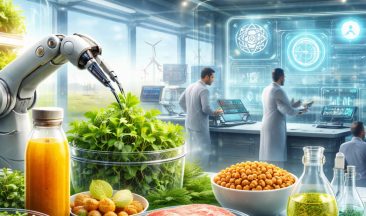
Regenerative agriculture 2.0 combines the latest advances in biology with big data and data analytics to deliver quantifiable resilience. Scalable regeneration improves global food security through the protection and regeneration of agricultural lands, the reclamation of marginal lands, and the strengthening of rural communities and agricultural economies.
Regenerative Ag 1.0 vs. 2.0: What’s Changed?
Regenerative Agriculture 1.0 was essentially focused on ecological principles like planting cover crops, no-till land management, and crop rotation. These principles are basically sound and have been used for millennia, but were often crudely implemented, either on a trial and error basis, or according to traditional agricultural practices passed down through generations of farmers.
Regenerative Agriculture 2.0 takes core regenerative practices and transforms their potential through the integration of digital tools and precision agriculture technology. AI-enabled biologicals are particularly useful for improving soil health, while stakeholders can utilize advanced monitoring, reporting, and verification (MRV) systems to verify, tailor, and adapt regenerative agriculture methods on a localized basis. Where the goal is to reduce carbon footprints, regenerative Agriculture 2.0 can provide market-ready impact metrics for ESG and carbon finance initiatives.
The Defining Features of Regenerative Agriculture 2.0
Regenerative Agriculture 2.0 covers a spectrum of technologies and disciplines, but for convenience, it’s possible to define four broad categories of technological innovation:
1. Data-Driven Agronomy
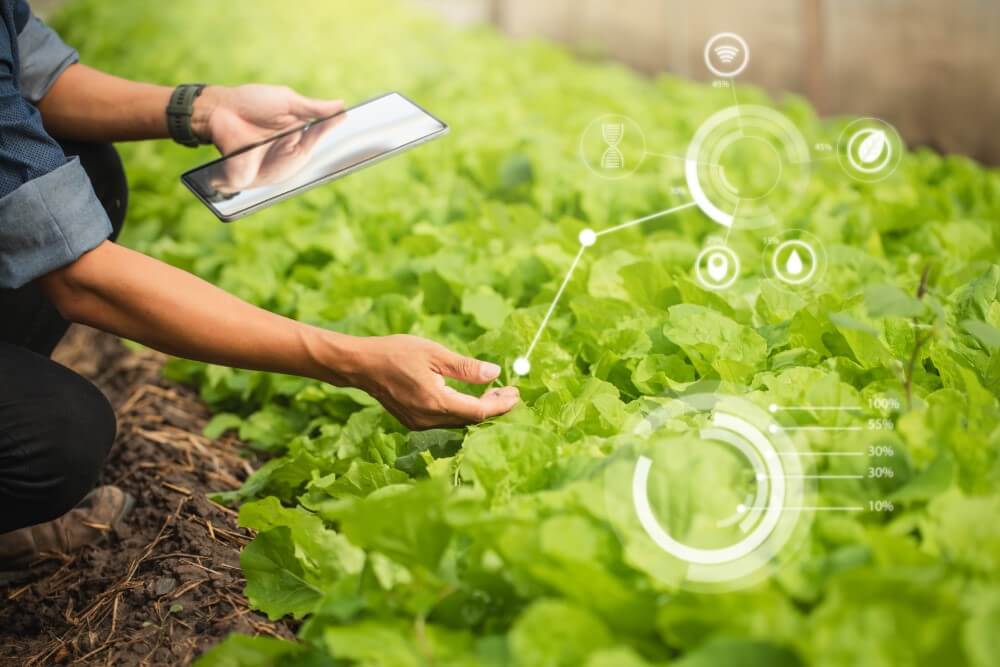
The development of successful regenerative agriculture strategies requires an understanding of a wide range of variables, including soil types, weather conditions, crop types and historical use of chemicals. The ability to utilize both historical and real-time data – often in combination – is a game changer for researchers and agronomical professionals.
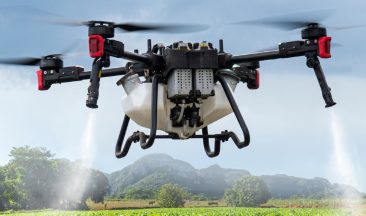
Field data can be gathered by sensors or drones and modeled by digital twins or other predictive analytical tools. Platforms like Agmatix enable decisions based on verified outcomes.
2. Biological and Microbial Innovation
Biostimulants have a key role to play both in plant health and resilience and in soil health. Biostimulants like the BIOZ range differ from fertilizers in that instead of providing crop nutrients, they stimulate the natural functioning of plants, increasing their resistance to abiotic stresses like drought or cold, and helping them to reach their natural potential.
AI is enabling innovators like Lavie Bio to develop sophisticated biostimulants, while other researchers are focusing on soil microbiome restoration through targeted microbial inputs.
3. Measurement and Accountability
One of the emerging trends in agriculture that is already making an impact is carbon utilization. MRV (monitoring, reporting and verification) systems track carbon, and can provide detailed data-based insights into biodiversity and soil health, enabling improvements.
Accurate and timely MRV data allows farmers to tap into potentially lucrative carbon markets and derive additional income streams from regenerative agriculture projects that capture or sequestrate carbon. There is also a solid potential to integrate regenerative agriculture into ESG strategies once MRV allows accurate reporting.
4. Tech-Enabled Scaling
A crucial feature of regenerative agriculture 2.0 – and arguably the characteristic that will ensure its success – is its capacity for tech-enabled scaling. A combination of remote sensing devices, the internet of things (IoT), and digital traceability tools makes impact scalable.
The strategic collaboration between Agmatix and NASA Harvest on evaluating the progress of regenerative agriculture initiatives from satellite to field level demonstrates the scope of tech-enabled scaling.
Although many corporate stakeholders instinctively think in terms of scaling up, the ability to deliver user-friendly regenerative agriculture technologies to smallholders and family farming units in emerging markets will be a game changer for global food security.
Benefits of Regenerative Agriculture 2.0
Regenerative agriculture 2.0 is essentially just responsible and effective land management (within the context of sustainable agriculture) that is science-based and data-driven. It harmonises short-term production requirements with long-term ecosystem viability.
What sets regenerative agriculture 2.0 apart from previous iterations is its utilization of advanced AgTech and Industry 4.0 technologies. Properly implemented regeneration strategies can improve crop yields and climate resilience, while increasing carbon sequestration and biodiversity.
A strong selling point for regenerative agriculture is the reduction of synthetic input dependence. Healthy soils and properly functioning ecosystems, and data-derived crop plans, potentially require fewer chemical inputs in the form of pesticides and biocides and chemical fertilizers.
Not only can this reduce grower overheads, it can be a powerful marketing tool to connect with consumers who prefer healthier food options. Regenerative agriculture 2.0 also helps stakeholders to meet corporate ESG goals and supports long-term profitability for farmers.
Real-World Examples of Regenerative Agriculture 2.0 Solutions
CropX is an agricultural analytics company that uses smart irrigation and soil sensing solutions to provide accurate preventative agronomic insights, allowing growers to optimize input use. Users can capture important soil data via the Vertex spiral-designed soil sensor.
When the sensors are used in conjunction with other tools, including the CropX Cloud and the CropX Strato weather station, and Rivo rain gauge, farmers obtain a highly accurate picture of soil (and crop) health, including soil moisture levels and temperatures, and can develop data-based strategies for regeneration.
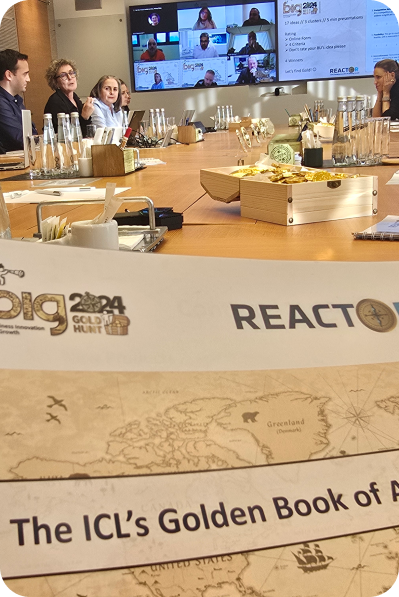
ICL Planet Startup Hub is an agrofood tech accelerator and incubator that invests in scalable, science-based regenerative agriculture startups. The Hub provides a flexible structure to assist startups to complete the journey to market and to develop market penetration as functioning companies.
The portfolio includes companies like Lavie Bio, an ag-biological company that creates highly innovative microbiome-based ag-biological products. Lavie Bio also utilizes big data and advanced informatics (via a predictive platform) to create novel bio-stimulant and bio-pesticide solutions.
A Pivotal Decade and the Role of Regenerative Agriculture
The coming decade will prove pivotal for global food security. Climate change (and associated extreme weather events), combined with continued population growth, are presenting major challenges for agronomists and growers. AgTech innovators also need to contend with resource depletion as they develop new solutions to deliver enduring food security.
Traditional regenerative agriculture can be impactful, but is limited in scope, seldom reaches its true potential, and is not always readily accessible to those for whom it will make the most profound impact. Regenerative agriculture 2.0 makes core processes measurable, quantifiable and verifiable. These are the prerequisites for investment – which is the key shift for global adoption of regenerative agriculture.
The Road Ahead
The shortest route to a global farming culture that integrates regenerative agriculture as a norm is through commercial incentivization. This begins with aligning regenerative agriculture with digital infrastructures and market opportunities e.g. corporate ESG strategies and carbon markets.
There is also a fundamental requirement for extensive cross-sector collaboration between startups, corporates, researchers, and farmers, as well as government agencies and policy makers, NGOs and other stakeholders in the extended agricultural value chain.
ICL is contributing to regenerative agriculture on a multi-tier basis through Agmatix, Lavie Bio and other collaborations and partnerships. The company’s open innovation model positions it as a key enabler.
Conclusion: Regeneration, Reimagined
Regenerative Agriculture 2.0 goes far beyond promoting soil health, protecting ecosystems and encouraging biodiversity. The transformative potential of Regenerative Agriculture 2.0 lies in its ability to scale sustainability and positively impact an obsolete agricultural system on a structural level.
Regenerative agriculture initiatives that were introduced in an attempt to counter soil depletion and habitat damage from 20th century intensive farming methods blended ecological principles and tradition. Regenerative agriculture 2.0 is harnessing technology to deliver data-based solutions that not only get positive results at field level, but allow them to be quantified and verified.
Regenerative Agriculture 2.0 is emerging as a key component of sustainable agriculture and is contributing directly and powerfully to food security and climate resilience. The four main pillars of Regenerative Agriculture 2.0 – data-driven agronomy, biological and microbial innovation, measurement and accountability, and tech-enabled scaling – are science-based, data-enabled, and, crucially, are driven by strategic collaboration.