2026 is set to be a pivotal year for AgTech innovations, as a wave of agricultural technologies moves from the pilot stage to real-world scale. After years of testing, refinement, and field validation, these solutions are beginning to influence both the global food supply chain and the farming industry’s carbon footprint in meaningful ways.
The future of agriculture is being shaped by pressures we can no longer ignore, climate volatility, labor shortages, and rising input costs. But it is also being shaped by smarter, cleaner, and more connected AgTech innovations. Tools once considered experimental are now delivering practical value in the field, helping growers work with greater precision and resilience.
Across the industry, five key agriculture trends are accelerating this shift. Together, they highlight how the future of AgTech is becoming sharper and more targeted, driven by solutions built for real crops, real constraints, and real performance.
What stands out across every signal we’re tracking is that these trends aren’t speculative anymore. They’re real, they’re being validated in the field, and they’re solving specific agronomic challenges with measurable impact.
Together, they showcase the agricultural technologies 2026 is bringing forward: tools built for real crops, real constraints, and real performance. The five AgTech innovations below point to a future of AgTech that is sharper, more resilient, and deeply grounded in biology, data, and day-to-day farming realities..
Trend #1 – Biologicals Go Mainstream
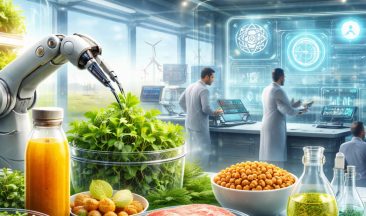
Biologicals are no longer the “next big thing” in AgTech, they’re becoming a core part of modern crop management. As growers look for yield stability, residue-light programs, and soil-friendly inputs, biological fertilizers, biostimulants, and biocontrols are rapidly gaining ground.
Market estimates consistently point to 10-14% annual growth, and recent retailer surveys show that 86% of distributors plan to expand their biological offerings in 2026. These signals reflect a sector that is scaling with real momentum.
What’s different now is the quality of biological innovation. They’re designed for specific crops, soils, and stress conditions and not as general-purpose solutions. This makes biologicals one of the most practical AgTech innovations of the year, especially as the industry leans into regenerative agriculture principles and healthier soil ecosystems.
In 2026, expect biologicals to be integrated directly into digital agronomy tools and nutrient programs. This new wave of agricultural technologies blends biology with data, helping growers optimize inputs, reduce synthetic loads, and improve soil performance. As demand rises for residue-light programs, biologicals will play a central role in shaping the future of AgTech and the broader future of agriculture.
Trend #2 – Field Robotics and Autonomy Gain Ground
Even with decades of mechanization behind us, agriculture remains heavily dependent on labor, and increasingly constrained by it. Labor scarcity, especially in seasonal operations, is now one of the biggest pressure points for growers worldwide. This is why field robotics and autonomy are moving from experimentation to adoption.
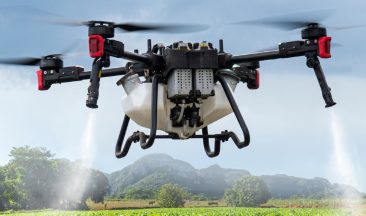
The signals are clear. Consolidation moves like Yamaha–Robotics Plus show that major players are preparing autonomous platforms for commercial scale. At the same time, on-farm trials are proving that autonomous tractors, drones, robotic sprayers, and crop-specific harvesters can consistently reduce labor needs, improve timing, and deliver more precise input use. For growers, this isn’t about novelty; it’s about getting work done safely, efficiently, and on time.
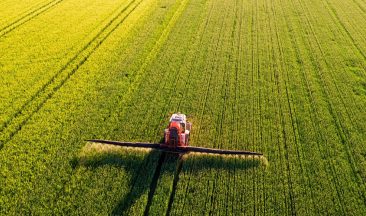
In 2026, robotics will integrate more deeply with the broader stack of AgTech innovations, variable-rate systems, AI scouting tools, and real-time sensing. What stands out is how quickly these technologies are becoming specialized: machines built for orchards, for vineyards, for high-value vegetables, and for broadacre operations. Purpose-built, not generic.
As adoption increases, robotics will help farmers minimize waste, protect workers, and operate with greater precision. This is where new technology in agriculture delivers immediate, measurable value; and where the future of AgTech strengthens its connection to real-world agronomic needs.
Trend #3 – AI-Driven Advisory and Input Optimization
AI is redefining the future of agriculture and is quickly becoming the invisible hand of modern farming, not replacing experience, but amplifying it. Dealers are already reporting higher adoption of GPS, autosteer, and variable-rate tools, and growers are layering AI-driven forecasting and scouting on top of their existing systems. These aren’t experimental features anymore; they’re becoming fundamental across leading AgTech trends.
What makes AI so transformative is its ability to cut through uncertainty. Farmers are navigating extreme weather shifts, shifting disease pressures, and volatile input costs, variables that move faster than any one person can track. AI analyzes soil data, microclimates, plant stress signatures, and satellite imagery to deliver real-time, field-specific recommendations. It doesn’t make decisions for farmers; it sharpens them.
In 2026, AI becomes the connective layer linking agricultural technologies across the entire production cycle. Digital solutions, agronomy tools, autonomous machinery, nutrient-use models, and sustainability platforms will increasingly work as one ecosystem. This is where new technology in agriculture delivers measurable value: earlier stress detection, smarter input timing, and more predictable yields, even under climate volatility.
For the future of AgTech, AI is no longer a standalone innovation, it’s the intelligence layer enabling more resilient, efficient, and data-driven farming.
Trend #4 – Water and Climate Resilience Tech
Climate volatility has stopped being a future threat, it’s now a daily operating condition for growers. Heat spikes, unpredictable rainfall, drought cycles, and extreme weather are reshaping what farmers prioritize and how quickly they adopt climate-smart solutions.
Across regions, demand data shows a clear shift toward irrigation optimization, drought- and heat-resilient genetics, and water-efficient nutrient systems. These technologies stand out on ag VC maps not because they’re exciting, but because they consistently protect yields under stress. In climate tech, credibility always outperforms charisma.
What’s different heading into 2026 is the rise of a true climate-resilience stack: sensors that monitor moisture in real time, genetics built for temperature extremes, precision fertilization systems calibrated for variable rainfall, and platforms that model water availability weeks ahead. These AgTech innovations aren’t abstract, they directly address the climate-driven risks growers feel in their fields every season.
The outcome is straightforward: more stable yields, better water efficiency, and fewer “lost years” when weather works against the crop. As climate-tech and AgTech continue to intersect, the future of AgTech becomes inseparable from the ability to manage water, anticipate stress, and keep production resilient in a world that’s changing faster than the traditional playbook ever imagined.
Trend #5 – Financing Innovation for Tech Adoption
One of the biggest gaps in AgTech today isn’t invention, it’s adoption. Growers recognize the value of robotics, biologicals, and digital tools, but the upfront costs and seasonal cash-flow constraints can slow adoption even when the benefits are clear.
This is why financing innovation is becoming just as important as the technologies themselves. More growers are turning to equipment-as-a-service, input financing, and outcome-based agreements that link payments to performance or environmental results. These models reduce capital pressure, shift risk away from the farmer, and create a clearer path for bringing advanced solutions into everyday operations.
Heading into 2026, financing becomes a deeper part of the AgTech ecosystem. Blended finance, carbon-linked incentives, and partnerships between corporates, lenders, and climate-tech platforms are emerging to help farmers adopt tools that were once out of reach. This isn’t about pushing technology, it’s about removing structural barriers so farmers can adopt what genuinely works.
At the end of the day, adoption doesn’t hinge on invention; it hinges on access. Financing innovation is the bridge that turns promising tools into practical ones, ensuring that robotics, biologicals, and digital decision-support systems can reach the growers who need them most.
The Outlook for 2026 — Scaling Smart, Growing Sustainable
PitchBook’s Q1 2025 data shows an AgTech market that is cooling, but far from retreating. Venture activity totaled $1.6 billion across 137 deals, a decline from the previous quarter but still competitive, with investors concentrating capital in companies demonstrating real traction. Ag biotech and precision agriculture led the way, reflecting continued demand for automation, data-driven tools, and resilient crop technologies.
What’s most encouraging is that the technologies gaining momentum now aren’t speculative. Biologicals supported by strong field data, robotics built to address real labor constraints, AI tools grounded in agronomy, and climate-resilience solutions tested under stress — these are systems proving their value, not just their potential. The story heading into 2026 is one of sharper execution and closer alignment with how growers actually operate.
AgTech is also entering a phase where collaboration matters more than scale alone. Startups, corporates, researchers, and growers are closing the gap between invention and adoption, bringing credibility to a space once dominated by broad promises. Through ICL Planet, ICL is actively partnering with founders building biological, AI-driven, and climate-resilient tools that growers can actually adopt, helping bridge the gap between innovation and real-world use.
If 2025 was about proving what works, 2026 is about deploying it where it’s needed most. This is the year AgTech becomes practical, where technology serves the field as much as the narrative, and where resilience, precision, and biological depth begin to shape outcomes in measurable ways.